Forget the Monday status meeting
Eight people, one hour, every Monday. That is a full working day spent saying out loud what the tracker already knows.

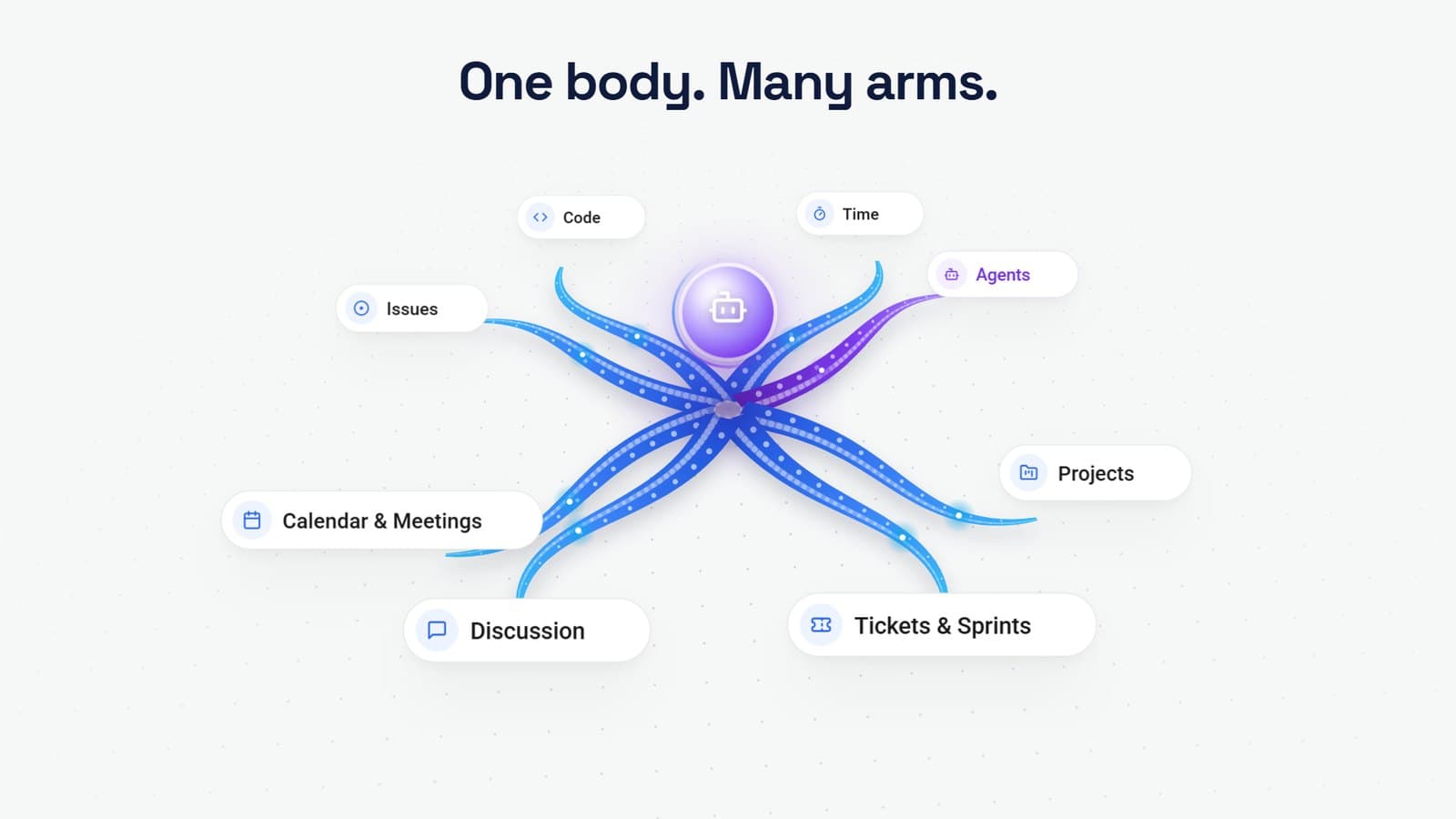
Count it once. Eight people in a room for an hour is eight hours of work, every week, spent telling each other things that are already written down somewhere. The meeting exists because "somewhere" is five different tools.
Atlassian surveyed 12,000 knowledge workers for its State of Teams 2025 report and found that teams lose a quarter of their time just searching for answers. A status meeting is that search, done out loud, with everyone watching.
Three habits worth dropping
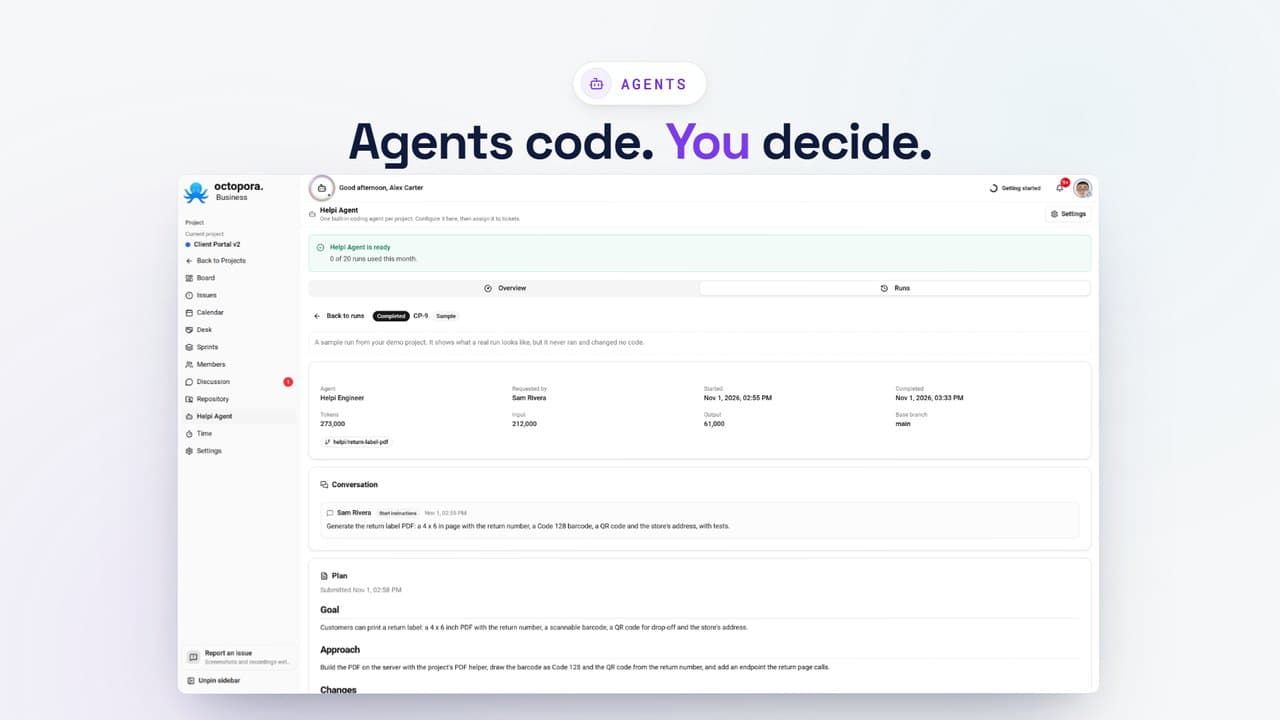
The status meeting. On a Friday at 4:55 pm, a client asks whether next week's launch is on track. In Octopora the answer is already on the screen: the project's health, the milestone, the ticket still waiting and who is on it. Or ask Helpi what is late: it answers from the project itself.
The Friday timesheet. Nobody remembers on Friday what they did on Tuesday. Start a timer on the ticket when you start the work. On the desktop app it pauses when you step away. The hours and their cost are already there when someone asks.
The hunt for a decision. It was made in a chat thread two weeks ago, and now nobody can find it. In Discussion, a hash links the message to the ticket or the meeting it was about, so the decision sits where the work is.
What you keep
Keep the meetings where people decide something. Drop the ones where people read out loud. A team that can see its own work does not need to be told about it once a week.
Octopora is free for up to five people. Try one week without the status meeting, and see who misses it.