One task, many tools, and nobody has the whole story
A scattered stack is paid for in hours spent looking for things. Here is what one workspace changes, and what it leaves alone.

Follow one task through a normal week. It starts as a message in the chat. Someone copies it into the tracker. The fix lives on a branch. The decision about it was made in a meeting. Four places, and each one holds a piece.
Ask anyone on the team for the whole story, and you get the version of the tool they happen to live in.
What scattered costs
This year Stack Overflow asked more than 12,000 developers what makes context hard to get. More than half, 53%, answered that information is spread across too many tools. Three out of four spend five hours or more a week looking for what they need.
A small team pays twice: once in those hours, and again in subscriptions. A tracker, a chat, a calendar with calls, a time tracker, a help desk. Five invoices for one team's week.
What one workspace means in practice
Octopora has twelve modules, and they all write to the same record. That sounds abstract until you use it.
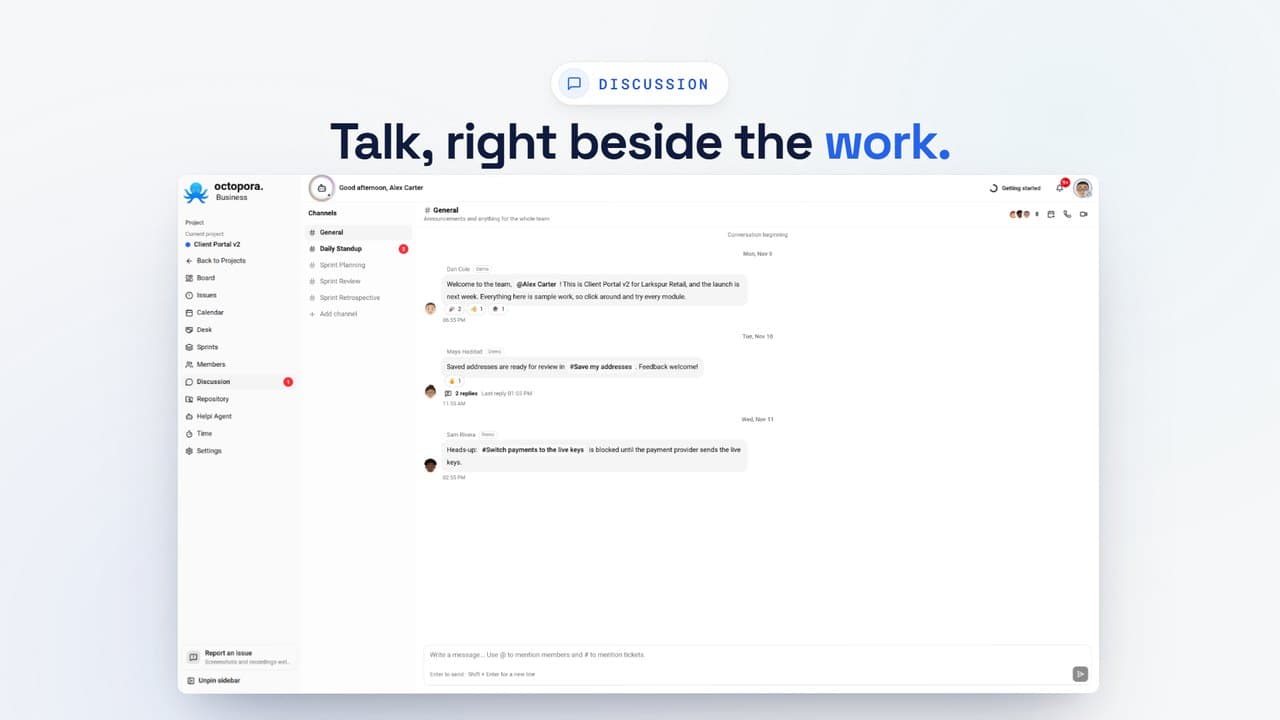
- Type a hash in a message to link the ticket or the meeting you are talking about.
- Start a timer on the ticket itself. Hours and cost add up per member and per ticket.
- Open the calendar event and join the call from there. A client comes in by guest link.
- Issues gather bugs and requests, the team votes, and one becomes a ticket that stays linked.
- Each ticket finds the commits and pull requests that carry its key, from your GitHub or GitLab repository.
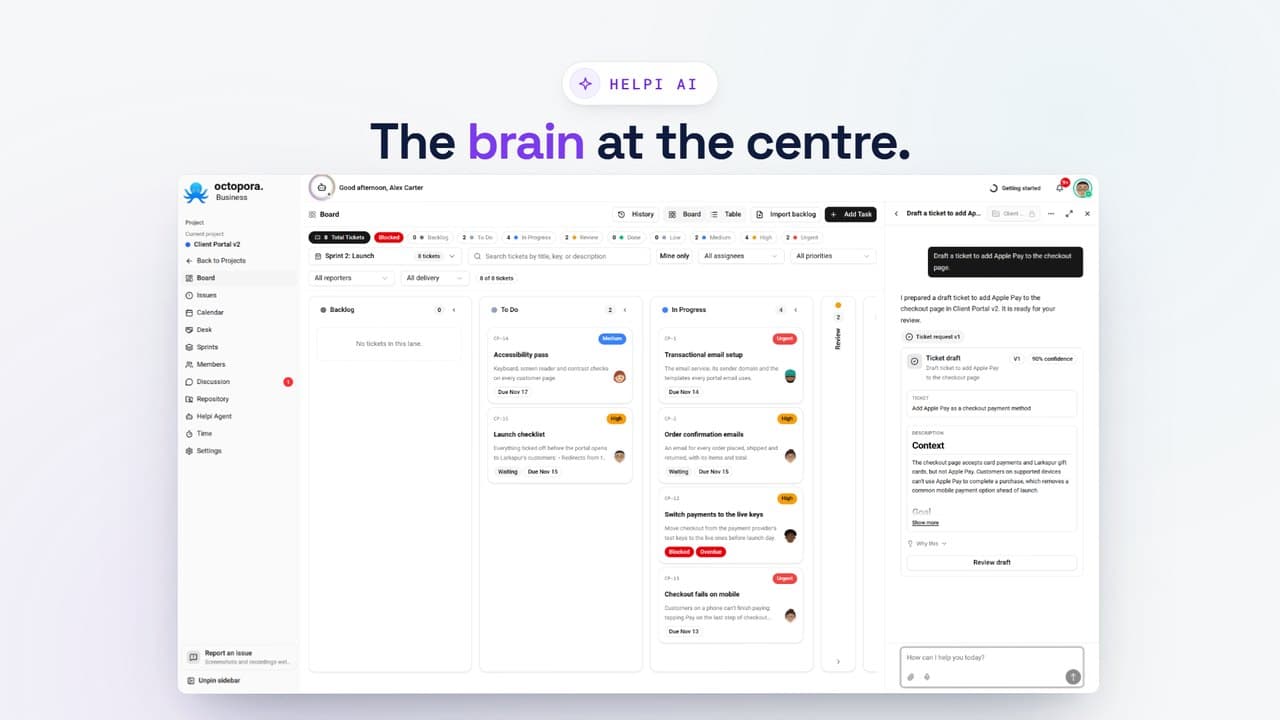
And because everything sits in one place, Helpi can answer from all of it.
What it leaves alone
Your code stays on GitHub or GitLab, and Octopora connects to it. Your meetings can stay in Google Calendar, and the two stay in sync. One workspace should remove tools. It should also get along with the ones you keep.
It is free for up to five people. Bring one real project, and count the tabs you close.